Both target the same pigment, but not with the same precision. On phototypes IV to VI, that detail decides the result — and the safety.
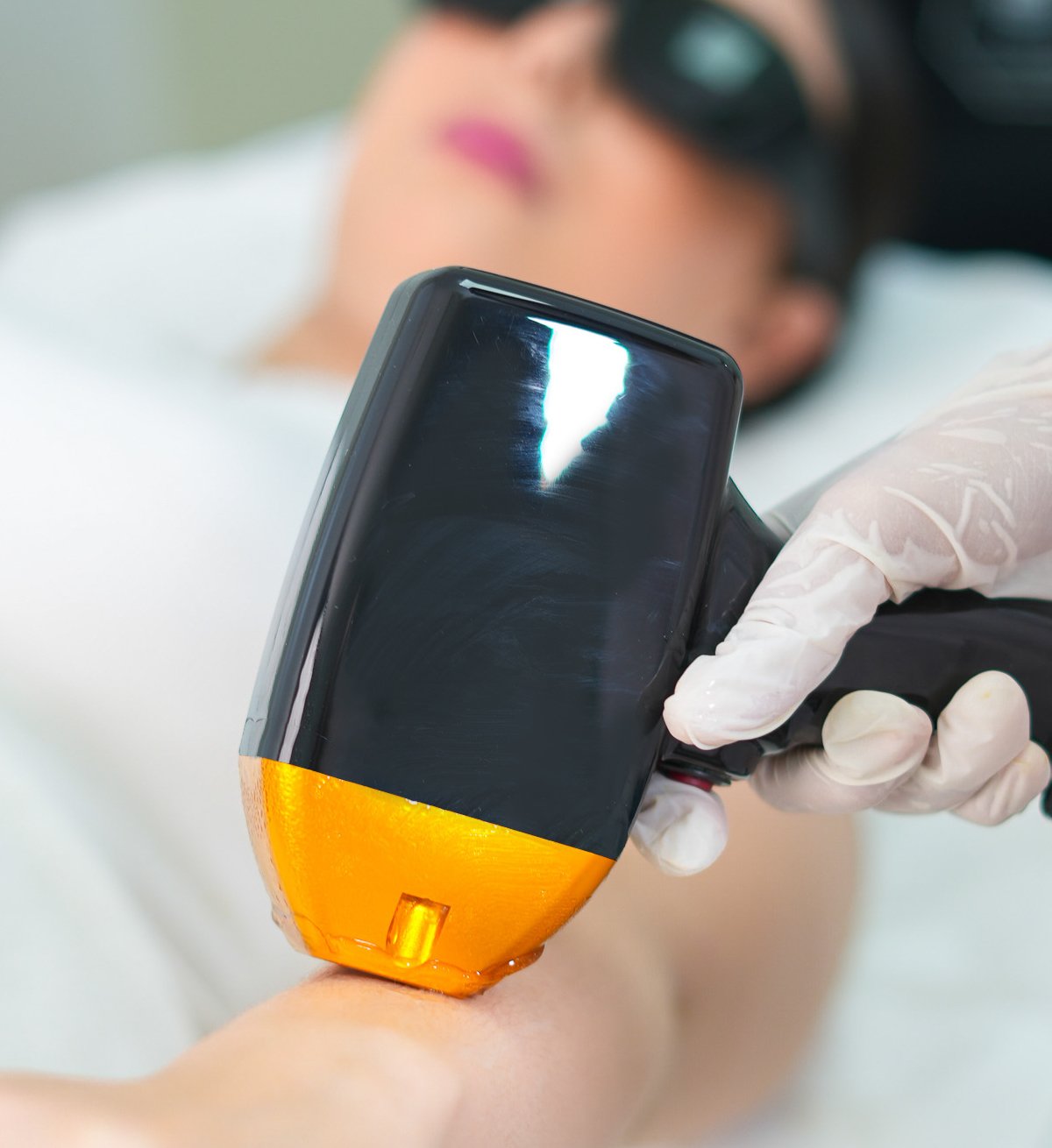
On medium or darker skin, laser is both safer and more effective than intense pulsed light. The reason fits in one sentence: a laser emits a single wavelength chosen to target the pigment in the hair, while IPL emits a broad spectrum that melanin-rich skin also absorbs. The darker the skin, the more that gap matters.
How light-based hair removal works
Both technologies rest on the same principle: melanin in the hair absorbs light energy, turns it into heat, and that heat destroys the structures which produce the hair. The whole challenge is to heat the hair without heating the surrounding skin — and skin, too, contains melanin.
That is what makes phototype a central question rather than a secondary one. Phototypes IV to VI, the large majority in Morocco, have skin that naturally absorbs more light.
What separates laser from IPL
- A laser emits a single calibrated wavelength; IPL emits a broad spectrum, filtered but less selective.
- A laser penetrates more deeply, which matters for thick hair and dense areas.
- IPL covers a larger surface per pulse, so it is faster across large areas.
- On fair skin with dark hair, both work well; the gap widens as the skin darkens.
Which laser for which phototype
The diode laser, around 810 nanometres, is the most versatile: it suits a wide range of phototypes and handles medium to thick hair well. The Nd:YAG, at 1064 nanometres, penetrates deeper and is far less absorbed by skin melanin, which makes it the reference for the darkest phototypes. That choice is not made from a menu but after an examination.
How many sessions, and why so many
Expect six to eight sessions in most cases, spaced four to eight weeks apart depending on the area. That number is not a commercial one: at any given moment only a fraction of hairs are in the active growth phase, the only phase in which they are permanently destroyed. Each session catches a new wave. Which is why spacing matters as much as the count.
- Face and underarms: short cycles, closely spaced sessions.
- Legs and back: long cycles, more widely spaced sessions.
- After the course: a few maintenance sessions, often one a year.
Why we say reduction, not removal
The phrase permanent hair removal is shorthand. What is achieved is a lasting, substantial reduction in density, with remaining hairs finer and lighter. Follicles can reactivate, particularly under hormonal changes. A clinic promising zero hair for life is promising something it cannot deliver.
The precautions that change everything
- No tanned skin: a recent tan raises the risk of pigment marks or burns. Allow a gap after sun exposure.
- No waxing or plucking between sessions: the laser needs the hair and its root. Shaving is fine.
- Daily sun protection on treated areas, throughout the course.
- Declare any current medication: some drugs make skin photosensitive.
- Ask for a patch test on a small area if your phototype is dark.
In Rabat and in Casablanca, Bloom Clinic establishes your phototype and the right technology during the first consultation, which is free. It takes a few minutes and saves months of badly calibrated sessions.