Three technologies, three different problems. How to choose based on what actually bothers you in the mirror — and what none of the three will do.
There is no such thing as one non-surgical lift, but three families of techniques that do not treat the same thing. HIFU tightens at depth, radiofrequency firms the surface session after session, microneedling rebuilds skin quality. The right choice does not depend on the newest technology: it depends on what bothers you when you look at yourself.
Why non-surgical lifting became the number-one request
The demand itself has changed. For twenty years aesthetic medicine promised transformation; today people come asking for the opposite — that nobody notice anything, except that they look rested. That shift explains the success of technologies that work slowly, with no incision, no general anaesthesia and no week off.
It also explains a common confusion. These devices are filed under the same word — lifting — when they act at different depths, on different tissue, over different timelines.
HIFU: reaching the deep layer
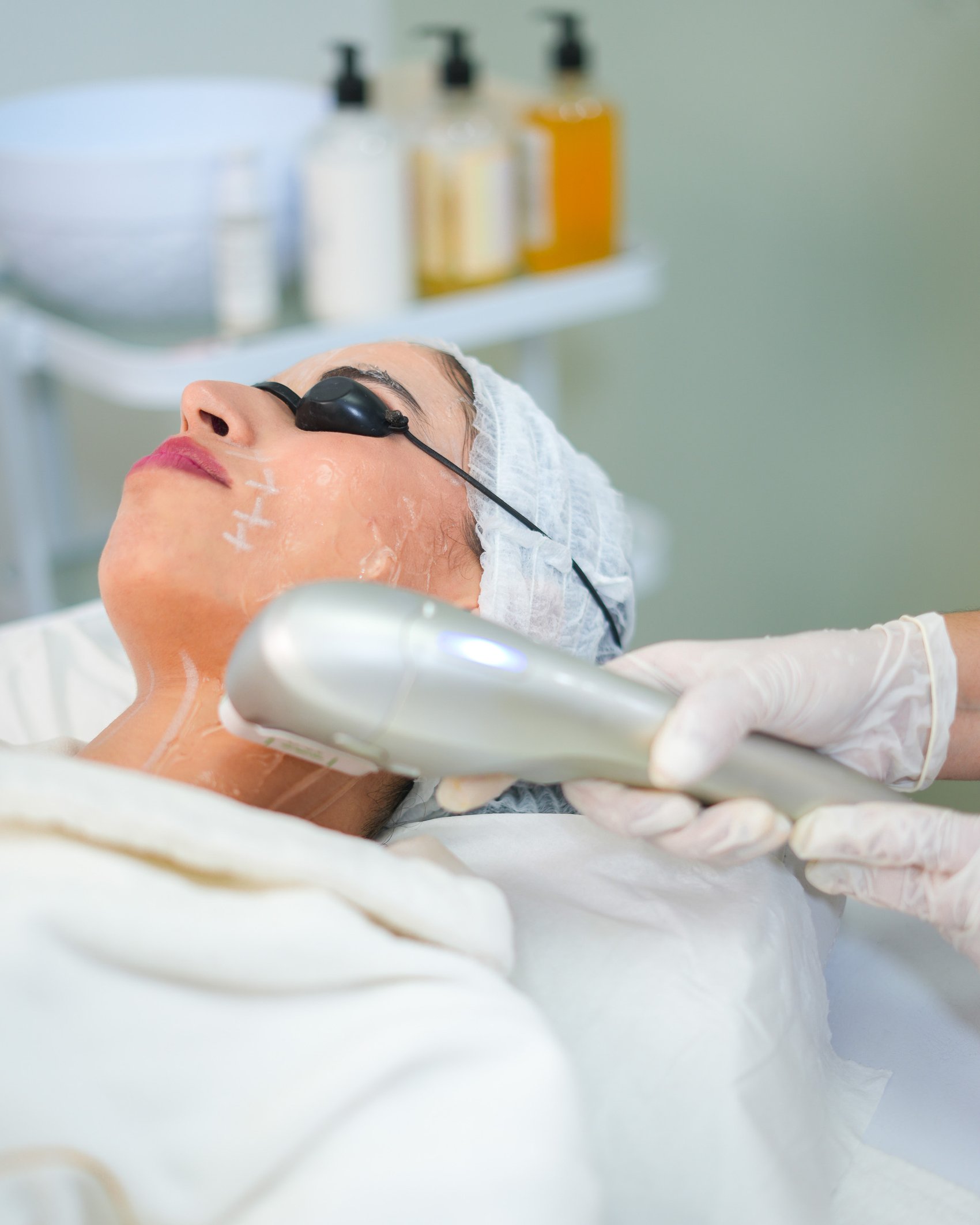
HIFU (high-intensity focused ultrasound) concentrates energy on precise points beneath the skin, down to the plane a surgeon addresses during a facelift. The heat creates micro-points of coagulation which, in response, trigger the production of new collagen. The surface of the skin itself is never breached.
- For whom: a jawline that is slackening, a neck or brow that is dropping.
- Rhythm: usually a single session, possibly repeated after a year.
- Timeline: the result builds over two to three months; nothing is visible on the way out.
- Sensation: deep heat in pulses, occasionally sharp for a few seconds over bone.
Radiofrequency: heating collagen, as a course
Radiofrequency heats the dermis diffusely, to a temperature high enough to contract existing collagen fibres and stimulate new ones. It is background work, gentler than HIFU and more gradual: the aim is not a single point of tension but overall firming.
- For whom: skin that lacks tone more than it actually sags; early laxity.
- Rhythm: a course of several closely spaced sessions, then maintenance.
- Timeline: a light immediate effect, a real result after the course.
- Sensation: comfortable warmth, often described as pleasant.
Microneedling: not a lift, a repair
Microneedling creates controlled micro-perforations in the dermis to trigger a healing process. That process rebuilds collagen and elastin where the skin is damaged. It will not lift a jawline: it changes texture, tightens pores, softens acne scars and fine lines.
- For whom: marked, uneven or dull skin, scarring, enlarged pores.
- Rhythm: a series of sessions four to six weeks apart.
- Timeline: the skin changes gradually, texture before firmness.
- Aftermath: redness for twenty-four to forty-eight hours — the only one of the three that leaves any.
How to choose in practice
- What bothers you is the jawline or the neck coming down: HIFU is the most direct answer.
- What bothers you is skin that has lost its spring without really dropping: radiofrequency, as a course.
- What bothers you is texture, pores, scarring, grain: microneedling.
- In real life it is often a combination — laxity and skin quality age together.
What none of the three will do
None of these technologies removes skin. Faced with significant excess skin or pronounced sagging, they will give a partial, disappointing result, and it is more honest to say so beforehand than afterwards. The same applies to timing: none of this is visible the day after a session.
A skin diagnosis exists precisely to settle that question. In Rabat and in Casablanca, the first consultation at Bloom Clinic is free: we look, we measure, and we tell you which technique applies to your face — and which one would achieve nothing.